
Quick Answer
Winter low mood is real: about 5% of people experience seasonal affective disorder each year, and day length and temperature measurably affect depression severity. Physical activity reliably improves mood in general populations, and light therapy is the best-established SAD treatment. The practical PG plan: train indoors on a fixed schedule, get bright light early, and seek professional help if symptoms are significant.
Prince George loses a lot of daylight in deep winter — it can be dark before dinner. For some people that's just annoying; for others it genuinely flattens mood, energy, and motivation. Either way, the dark months are where training routines quietly fall apart. Here's the evidence, and a plan that survives a PG January.
The winter slump is measurable, not imaginary
Seasonal affective disorder — fall/winter depression that remits in spring and summer — affects about 5% of the population in a given year, with symptoms present for roughly 40% of the year.[1] Plenty more people get the milder "winter blues." And it tracks the environment: analysis of mobile-health data found that temperature and day length significantly influenced depression severity, which in turn affected how physically active people were.[2] Short, cold days don't just feel demotivating — they measurably reduce activity.
What helps — honestly
Two things have the strongest support, and it's worth being precise about each:
- Light: light therapy is the best-established treatment for SAD.[3] Getting bright light — ideally daylight — earlier in the day is a low-cost habit worth building.
- Activity: physical activity reliably improves depressive symptoms in general populations. The SAD-specific exercise research is still developing, so the honest framing is that training is strong support for winter mood and routine — not a guaranteed treatment for clinical SAD.[3]
If winter symptoms are significant — persistent low mood, loss of interest, sleep or appetite changes — treat it as health, not willpower, and talk to a professional. Exercise is a complement to care, not a substitute for it.
Why training indoors changes the math in winter
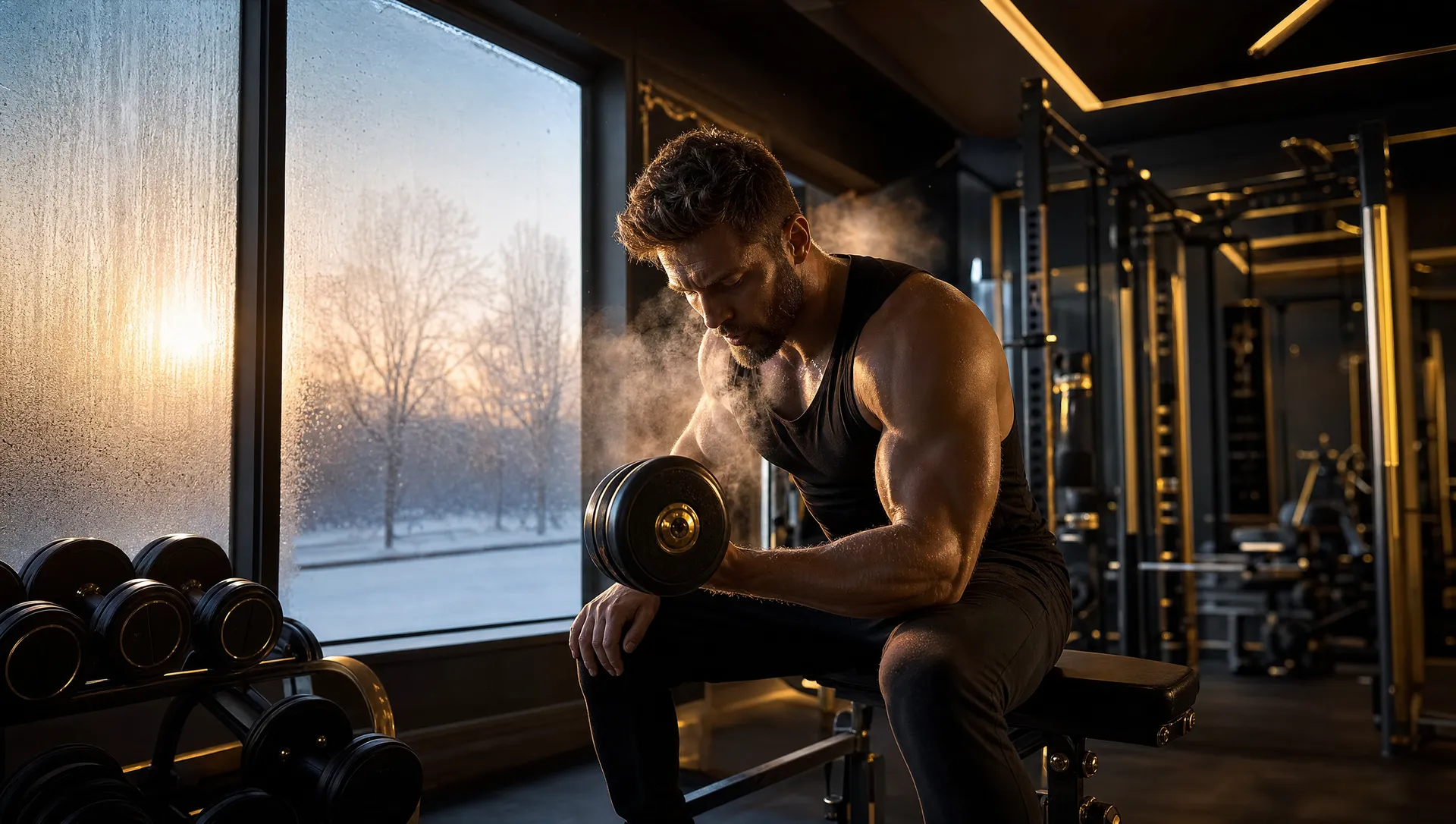
The biggest enemy of a winter routine isn't intensity — it's the excuse. When it's −25°C and dark, "I'll skip today" wins. An indoor facility removes the two variables that kill consistency: weather and daylight. The session is the same at 6 a.m. in January as it is in July, which makes showing up a decision about habit rather than conditions.
A winter consistency plan for PG
| Lever | How to use it |
|---|---|
| Fixed time | Anchor workouts to the same slot daily so darkness can't move the goalposts. |
| Indoor by default | Train where weather and daylight are irrelevant — the plan can't be cancelled by a forecast. |
| Light early | Get daylight or bright light in the morning when you can. |
| Social pull | Use the accountability of a gym floor; showing up for people beats relying on motivation. |
| Lower the bar | On the worst days, a short session still counts. Consistency > intensity through winter. |
Bottom line
The winter slump is real and partly driven by light and cold, not just discipline. Stack the levers that have evidence behind them — bright light early, consistent indoor activity, and professional help when symptoms are real — and you keep your training (and a good chunk of your mood) through the darkest stretch of the PG year.
Frequently asked questions
What is the winter slump / seasonal affective disorder?
Seasonal affective disorder (SAD) is fall/winter depression that lifts in spring and summer. About 5% of the U.S. population experiences it in a given year, with symptoms present for roughly 40% of the year. Milder "winter blues" are even more common.
Does exercise help with winter mood?
Physical activity reliably improves depressive symptoms in general populations and supports mood, sleep, and routine. SAD-specific exercise research is still developing, so treat training as strong support — not a replacement for professional care if symptoms are significant.
What actually treats seasonal affective disorder?
Light therapy is the best-established treatment for SAD. Day length and temperature measurably influence depression severity, which in turn affects how active people are. A combination of light exposure, consistent activity, and professional guidance is the practical approach.
How do I stay consistent training through a dark PG winter?
Anchor workouts to a fixed time, train indoors so weather and darkness can’t cancel the plan, get daylight or bright light early when you can, and use the social pull of a gym floor. Consistency beats intensity through the dark months.
Train Indoors, Year-Round
Climate is no excuse at Gold's Gym PG
21,000 sq ft of climate-controlled training floor — heat wave, smoke, or −20°C, your session doesn't change.
Claim a Free Guest PassMore Training Insights
View all →

Sources
- AAFP — Seasonal Affective Disorder
- npj Mental Health Research (Nature) — Assessing seasonal and weather effects on depression and physical activity
- PMC — Seasonal Affective Disorder: An Overview and Update
This article is general educational information, not medical advice. Talk to a qualified professional before changing how you train, especially with a heart, lung, or other medical condition.