
Quick Answer
Heat makes training harder because your body diverts blood to the skin to cool down, leaving less for your muscles and pushing your heart rate up at the same effort. Hydration is the lever: plasma (blood) volume rises about 4% when you’re well hydrated and falls about 4% when you’re not. Drink before and during, and on the hottest days train indoors to hold your intensity.
Everyone knows a workout feels worse in the heat. Fewer people know why — and that the "why" is a real, measurable change in your cardiovascular system, not just a motivation problem. Understanding it lets you train around it instead of just suffering.
What heat does to your blood
When you exercise in the heat, your body has to do two jobs at once: deliver blood to your working muscles, and send blood to your skin to dump heat through sweating. To make that possible, acute heat exposure triggers an initial increase in plasma volume — a fluid reservoir that supports sweating and cushions the drop in central blood volume as blood redirects to the skin. Without that increase, body temperature would climb faster and heat tolerance would fall.[1]
Hydration is the whole game
Hydration status flips the math. During exercise, plasma volume increased about 4% when subjects were well hydrated and decreased about 4% when they were under-hydrated.[2] That swing matters: dehydration from sweat loss raises blood concentration and lowers blood volume, both of which reduce sweat output and skin blood flow — the exact tools your body uses to cool itself. Those losses in cardiovascular function are largely prevented when you maintain hydration by drinking during exercise.[3]
The single highest-leverage thing you can do to make hot training feel easier is to start hydrated and keep drinking — not to tough it out.
Why your heart rate spikes
In the heat, more blood pools at the skin for cooling, so less returns to fill the heart each beat. To keep output up, heart rate rises — which is why the same pace or load feels harder and your watch reads higher than usual on a hot day. It's not weakness; it's thermoregulation competing with performance.
Your body can adapt — to a point
Heat acclimation is real: with consistent exposure, the body increases the rate and sensitivity of sweating and skin blood flow, and lowers both whole-body temperature and heart rate during submaximal work in the heat. With adequate fluid and electrolytes, the plasma-volume expansion persists and reduces cardiovascular strain.[4] It typically takes one to two weeks — and it only goes so far. Extreme heat still degrades hard efforts.
How to train through a Prince George heat wave
- Pre-hydrate. Arrive topped up, not planning to "catch up" mid-session.
- Drink during. Small, regular sips beat one big bottle at the end.
- Replace electrolytes on long or very sweaty sessions, not just water.
- Move hard sessions indoors. For PRs and brutal conditioning, climate-controlled air removes the heat tax entirely so you can hold intensity.
Bottom line
Heat training feels harder because it genuinely is harder on your cardiovascular system — and hydration is the dial you control. Start hydrated, keep drinking, give yourself a week or two to acclimate, and on the hottest days train inside so the workout you planned is the workout you get.
Frequently asked questions
Why does working out feel so much harder in the heat?
In the heat your body sends more blood to the skin to cool itself, leaving less for your working muscles, so your heart rate climbs at the same effort. If you’re even slightly dehydrated, blood volume drops further and that strain increases.
How much does dehydration affect a hot-weather workout?
During exercise, plasma (blood) volume rises about 4% when you’re well hydrated but falls about 4% when you’re under-hydrated. Staying hydrated keeps sweat output and skin blood flow up, which is exactly how your body sheds heat.
Does the body adapt to training in the heat?
Yes. Heat acclimation expands plasma volume and raises your sweat rate and sensitivity, which lowers heart rate and core temperature at the same workload. It typically takes one to two weeks of consistent heat exposure.
Is it better to train indoors in a heat wave?
For hard or long sessions, yes. Climate-controlled air lets you hold intensity without the added cardiovascular strain and dehydration risk of training in the heat — you get the workout you planned instead of a watered-down version.
Train Indoors, Year-Round
Climate is no excuse at Gold's Gym PG
21,000 sq ft of climate-controlled training floor — heat wave, smoke, or −20°C, your session doesn't change.
Claim a Free Guest PassMore Training Insights
View all →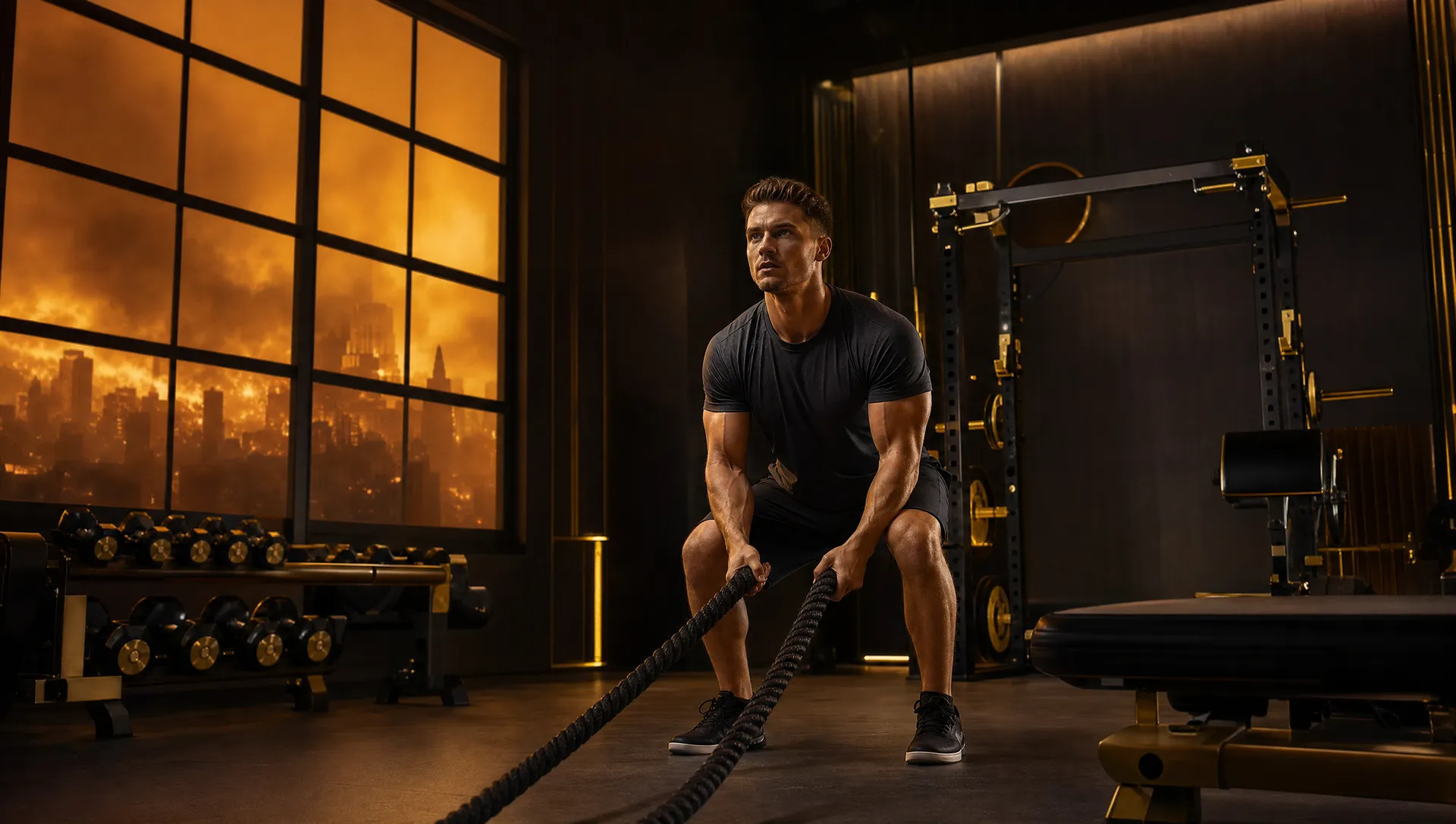
Sources
- NCBI / Institute of Medicine — Physiological Responses to Exercise in the Heat
- Journal of Applied Physiology — Impact of skin temperature and hydration on plasma volume responses during exercise
- Cardiovascular function in the heat-stressed human (PMC)
- ScienceDirect — Cardiovascular adaptations supporting human exercise-heat acclimation
This article is general educational information, not medical advice. Talk to a qualified professional before changing how you train, especially with a heart, lung, or other medical condition.